
Learn how metal grades and standards like IS, ASTM, and EN impact strength, durability, safety, and project cost. A practical guide for buyers and engineers.
Introduction
Metal is rarely just metal. The same base material can behave very differently depending on its grade and the standard it follows. Metal grades and standards define strength, durability, chemical composition, and performance limits. They exist to ensure safety, consistency, and reliability across industries such as construction, manufacturing, automotive, and infrastructure.
Choosing the wrong grade can lead to structural failure, higher maintenance costs, or unnecessary spending. Understanding metal grades helps buyers and engineers make informed decisions.
What Are Metal Grades and Standards?
Metal grades are classifications that describe a material’s chemical composition and mechanical properties. Standards are formal specifications issued by recognized organizations to ensure metals meet minimum quality and safety requirements.
The main purposes of metal standards include:
- Consistent quality across manufacturers
- Predictable performance under load and stress
- Compatibility in global supply chains
- Compliance with safety and regulatory requirements
Standards allow engineers and buyers to compare materials accurately rather than relying on generic labels.
Common Metal Standards Explained
IS (Indian Standards)
Indian Standards are widely used in domestic manufacturing, infrastructure projects, and government work. These standards are designed to suit local conditions, usage patterns, and cost considerations.
Common applications include structural steel, reinforcement bars, and industrial components used across India.
ASTM (American Society for Testing and Materials)
ASTM standards are among the most globally recognized metal specifications. They define detailed chemical composition limits, mechanical properties, and testing methods.
ASTM grades are commonly used in pressure vessels, pipelines, heavy machinery, and industrial fabrication worldwide.
EN (European Norms)
EN standards are used across European markets and are known for strict quality control, certification, and traceability requirements.
These grades are widely adopted in structural, mechanical, and safety-critical applications.
How Grades Affect Mechanical Properties
Tensile Strength
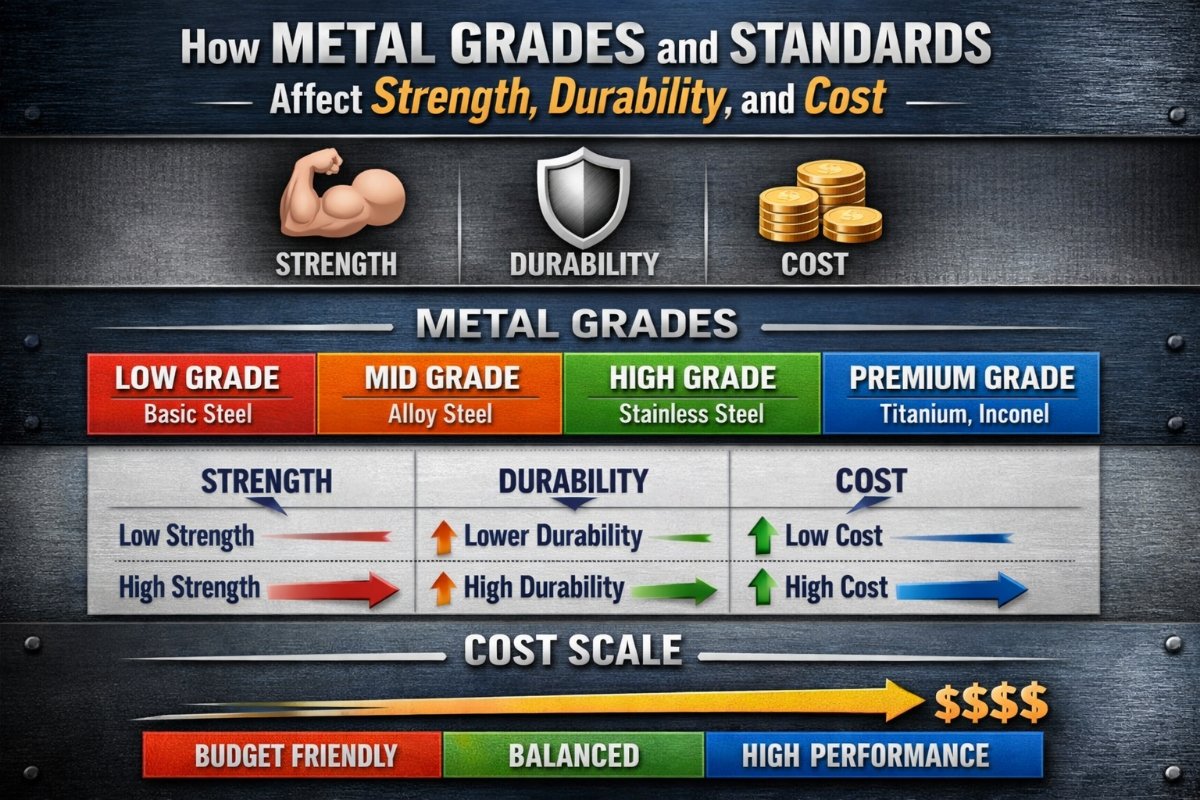
Higher-grade metals generally have higher tensile strength, allowing them to withstand greater pulling forces without failure. This is critical for load-bearing structures and mechanical components.
Hardness
Hardness affects wear resistance and durability. While harder grades last longer in abrasive environments, they may be more difficult to machine or weld.
Heat and Corrosion Resistance
Grades designed for high-temperature or corrosive environments include specific alloying elements. These improve performance but also increase material and processing costs.
Cost vs Performance Trade-Off
Higher metal grades cost more due to tighter manufacturing tolerances, additional alloying elements, and more rigorous testing.
However, higher cost does not always mean better value. Over-specifying a grade can increase project expenses without delivering real performance benefits. The key is selecting a grade that meets actual operational and safety requirements.
Choosing the Right Grade for Your Application
- Construction and Infrastructure: Standard structural grades are usually sufficient when they meet load and safety codes.
- Automotive and Machinery: High-strength and fatigue-resistant grades are essential for moving and stressed parts.
- Oil, Gas, and Power: Specialized grades are required for pressure, heat, and corrosion resistance.
- General Fabrication: Cost-effective grades with good weldability often provide the best balance.
Understanding the working environment and regulatory needs is more important than choosing the highest available grade.
Conclusion
Metal grades and standards directly affect strength, durability, safety, and cost. IS, ASTM, and EN standards remove uncertainty and ensure materials perform as expected.
The best material choice is not the strongest or most expensive option, but the grade that delivers required performance efficiently and safely.
Frequently Asked Questions
What does ASTM mean in metal grading?
ASTM refers to a set of internationally used standards that define material properties, testing methods, and quality requirements.
Are higher metal grades always better?
No. Higher grades offer better performance but may increase cost and fabrication complexity. The right grade depends on the application.
How do metal grades affect project cost?
Metal grades influence raw material price, fabrication effort, compliance requirements, and long-term maintenance costs.
Can the same metal have multiple grades?
Yes. The same base metal can be produced in multiple grades with different strength, composition, and performance characteristics.